
There is a particular light that falls on the greenhouses of Timau in the early morning. It is not the harsh, white glare of artificial lamps, but the generous, golden wash of equatorial sun filtered through high-altitude air.

Here, at 2,400 meters above sea level, Kikwetu Flowers has learned to work with this light rather than against it. To harness it. To let it do what nature intended, while we tend to the rest. This commitment to natural processes reflects our dedication to sustainable rose farming.
For years, the flower industry measured success in stems per square meter and vase life in days. These metrics matter. But something else has entered the conversation—a quieter, more persistent question that buyers, florists, and end consumers are now asking: At what cost was this beauty grown?
The answer, at Kikwetu, is: responsibly.
By embracing sustainable rose farming, we ensure that our practices not only support the environment but also create beautiful flowers that customers can feel good about.
Why Sustainability Is No Longer Optional in Floriculture
The global floral market has crossed a threshold. Sustainability is no longer a marketing garnish. It is becoming a baseline requirement. From Amsterdam to Dubai, from London to Tokyo, distributors and florists are fielding questions they never heard a decade ago.(sustainable agriculture )(Were these roses grown with recycled water? Is the farm solar-powered? Do the workers earn fair wages? Are they part of sustainable rose farming practices?
These questions are not accusations. They are invitations, to be better, to be transparent, to build a supply chain that can be spoken about with pride rather than defended with silence.
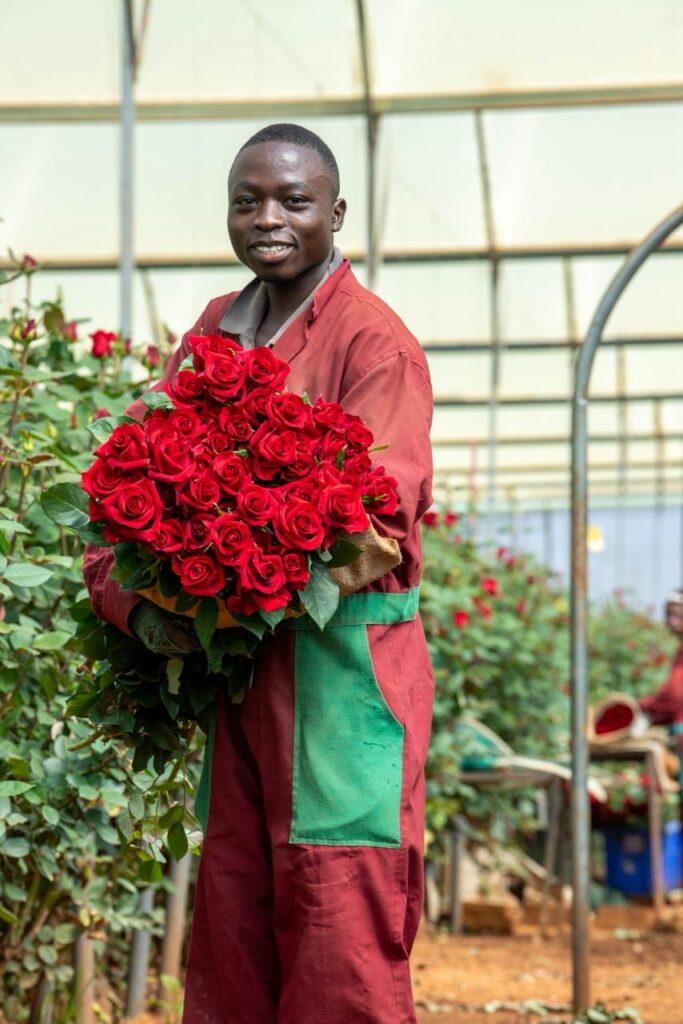
At Kikwetu Flowers, we accepted this invitation early. Not because it was fashionable, but because it was necessary. Kenya is a water-scarce country. Energy costs are volatile. Soil health is finite. And the people who make this industry possible deserve dignity. Sustainable rose farming in Kenya is not an aesthetic choice. It is a survival strategy and a moral compass.
The Kenyan Advantage: Nature’s Head Start
Kenya offers floriculture a gift that few nations can match: natural sunlight, year-round. While European and North American growers burn fossil fuels to replicate summer in January, Kenyan roses bask in twelve hours of genuine, unfiltered sunshine nearly every day of the year.
This natural advantage is the foundation of sustainable rose farming in Kenya. It means less energy input. It means smaller carbon footprints. It means roses that have grown at nature’s pace, not forced by artificial heat and light.
But a head start is not a finish line. What a farm does with this advantage defines whether it is merely located in Kenya, or truly rooted in responsibility.
Five Pillars of Sustainable Rose Farming at Kikwetu
Our approach to sustainability rests on five interconnected pillars. Remove one, and the structure weakens. Maintain all five, and the farm becomes not just productive, but regenerative.
1. Solar Energy That Powers the Bloom
The Timau sun does more than grow roses. It powers the entire operation. Kikwetu has invested in extensive solar infrastructure that generates a significant portion of the farm’s electricity needs. Cold rooms, irrigation pumps, office operations, much of this runs on energy captured from the same sky that feeds the plants.
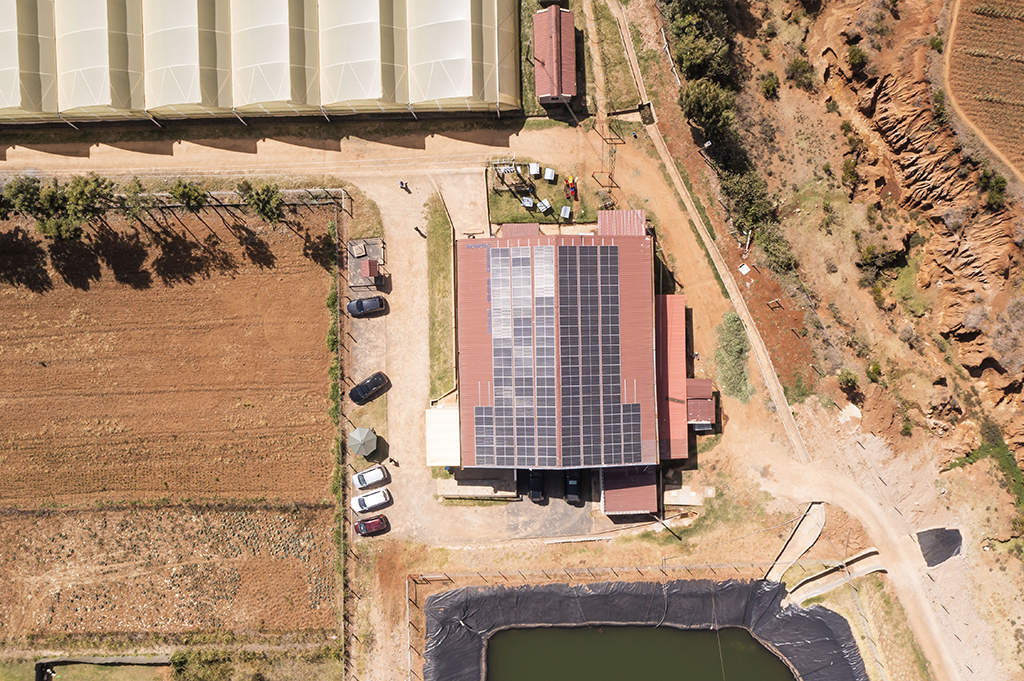
For distributors and florists, this translates to supply stability. Solar energy insulates the farm from grid failures and fuel price shocks. It means consistent production, consistent quality, and a smaller carbon footprint attached to every stem you receive.
2. Water Stewardship in an Arid Landscape
Water is the single most precious resource in Kenyan agriculture. At Kikwetu, we treat it accordingly.
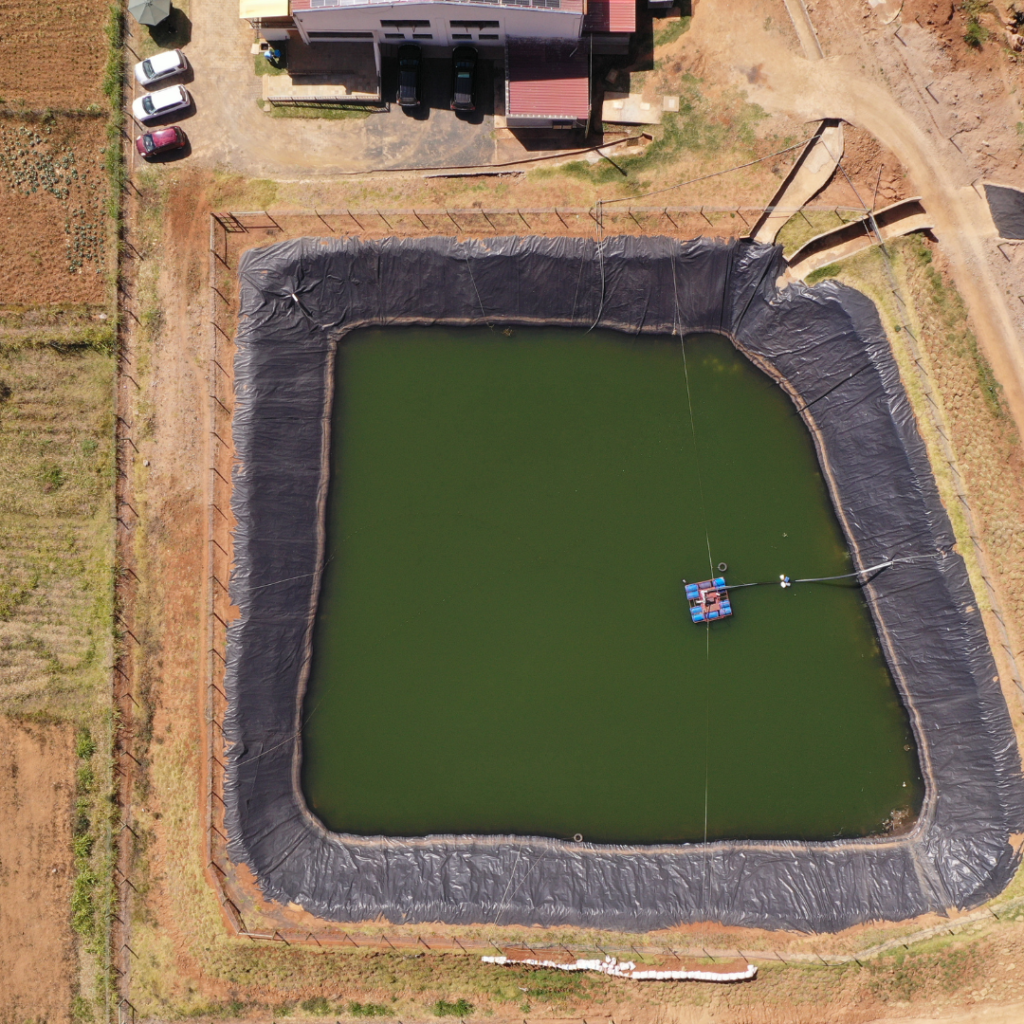
Our irrigation systems operate on a closed-loop principle. Runoff water is captured, filtered through biological and mechanical systems, and returned to the crop. Drip irrigation delivers precise amounts directly to root zones, eliminating the waste of broadcast sprinklers. Where possible, rainwater is harvested and stored for dry spells.
The result is a farm that produces premium roses while using a fraction of the water that conventional open-field agriculture would require. For our B2B partners, this means supply security even in drought years – a resilience that flows through to your own business.
3. Vermi-Tea and Living Soils
Chemical fertilizers offer short-term gains and long-term debts. They salt the soil. They deplete microbial life. They create dependency.
Kikwetu has turned to vermi-tea, an organic brew produced by earthworms digesting composted plant matter. This living fertilizer feeds not just the rose, but the soil itself. It builds structure, improves water retention, and fosters the beneficial fungi and bacteria that protect plants from disease.
Roses grown in living soil are stronger. Their stems are sturdier. Their petals hold color longer. And when they reach your shop, they carry none of the chemical residue that increasingly triggers consumer concern.
4. Integrated Pest Management
The old model of pest control was simple: see a bug, spray a chemical. The new model is more intelligent, more patient, and ultimately more effective.
Integrated Pest Management (IPM) begins with prevention. We use resistant rootstocks. We maintain greenhouse hygiene that disrupts pest breeding cycles. We introduce beneficial insects—predators and parasites that control harmful populations naturally. Chemical interventions become a last resort, not a first reflex, and when used, are selected for targeted impact and rapid degradation.
This matters to florists in markets with strict phytosanitary regulations. It matters to event designers whose clients ask about pesticide use. It matters to anyone who handles the stems and prefers not to encounter chemical residue on their skin.
5. People as the True Crop
No discussion of sustainability is complete without the people who make it possible. Kikwetu employs a workforce drawn from the surrounding community of Timau. These are not transient laborers. They are skilled horticulturists, many with years of experience in rose production.
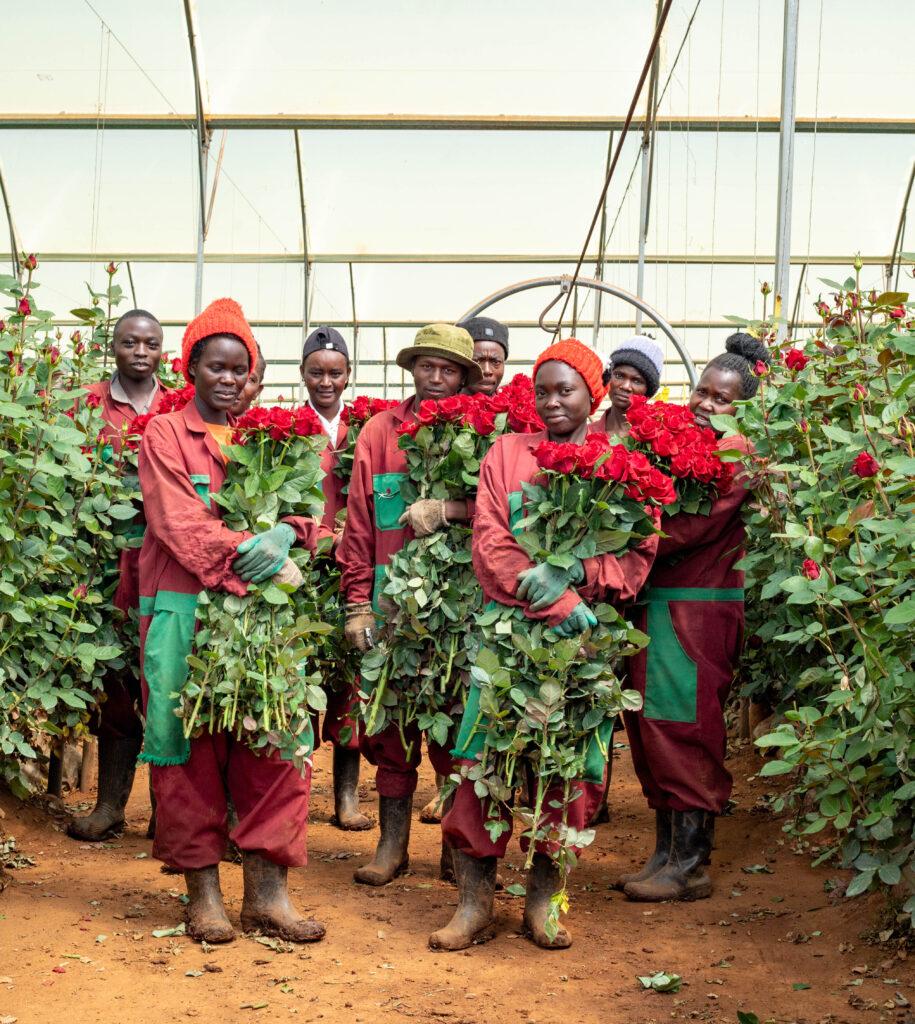
Fair wages are the foundation. Safe working conditions are non-negotiable. Continuous training elevates skill and pride. And because the farm invests in its people, the people invest in the farm. Turnover is low. Quality is high. The knowledge of how to grow a perfect rose stays within the operation, deepening with each season.
For global buyers, this ethical foundation offers something invaluable: a story you can tell your customers with confidence. A story of dignity behind the bloom.
What This Means for Global Distributors and Florists
Sustainability is not an abstract virtue for the supply chain. It is a practical advantage with measurable returns.
Supply Security: Farms that manage water, energy, and soil responsibly are more resilient to climate shocks. They produce more reliably through droughts, heat waves, and energy crises.
Market Access: European, North American, and Gulf markets are tightening sustainability requirements. Partnering with a certified, responsible grower now prevents compliance headaches later.
Customer Loyalty: End consumers increasingly vote with their wallets for ethical brands. Florists who can trace their roses to a farm like Kikwetu gain a narrative edge that mass-market suppliers cannot match.
Product Quality: Gentle, organic growing methods produce roses that are naturally vigorous. They travel better. They last longer. They open more beautifully.
The Certification Landscape: Beyond Marketing
Certifications matter because they verify claims. At Kikwetu, we pursue standards that are recognized globally and audited rigorously:
- Global G.A.P. for safe, sustainable agricultural practices
- Kenya Flower Council silver or gold standard for environmental and social compliance
- Fairtrade or equivalent ethical labor benchmarks where applicable
These are not stickers for packaging. They are proof that the farm has opened its doors, its books, and its practices to independent scrutiny. For distributors, they reduce due diligence burden. For florists, they provide credible answers to customer questions.
Looking Ahead: Regenerative Floriculture
Sustainability is a floor, not a ceiling. The next frontier is regenerative agriculture, farming that leaves the land better than it was found.
At Kikwetu, we are experimenting with cover crops between rose cycles to rebuild soil carbon. We are expanding our pollinator habitats. We are measuring our carbon footprint with the intent not merely to offset, but to reduce. The goal is a farm that sequesters more than it emits, that gives more than it takes.
This is long-term work. It does not yield instant headlines. But it is the only honest path for an industry that sells beauty extracted from the natural world.
The Kikwetu Promise
Every rose that leaves our farm carries more than color and fragrance. It carries the accumulated decisions of a team that chose responsibility over convenience, patience over shortcuts, and people over profit margins.
We do not claim perfection. Sustainability is a practice, not a destination. But we claim progress. We claim transparency. And we claim the willingness to keep improving.
For the distributors who move our roses across oceans, and the florists who arrange them into moments of joy, we offer this: a partner who understands that the beauty of the bloom is inseparable from the integrity of its growing.
Because in the end, a rose grown responsibly does not just last longer in the vase.
It lasts longer in the memory.
Ready to source roses grown with purpose?
Contact Kikwetu Flowers to discuss your sustainability requirements, custom varieties, and seasonal programs.
Kikwetu Flowers is a premium rose farm in Timau, Kenya, growing 41 varieties on 19 hectares for export to florists, wholesalers, and distributors who believe beauty should be rooted in responsibility.
1 comment