

The journey of a beautiful rose does not end in the greenhouse. In fact, for international flower buyers, that is where another important journey begins.
From the carefully cultivated highlands of Kenya to the bustling flower markets of Amsterdam, the floral boutiques of London and the wholesale distribution centres of Dubai, Kenyan roses travel across borders to bring colour, elegance and possibility to markets around the world.
But behind every successful shipment is a series of important decisions. Choosing the right grower, selecting suitable varieties, understanding export documentation, arranging transportation and maintaining the quality of the flowers throughout the journey all play a role in determining the success of an order.
For importers considering importing roses from Kenya, understanding this process is essential. A reliable sourcing decision goes beyond finding beautiful flowers. It means establishing a relationship with a grower who understands quality, consistency, communication and the demands of the international flower trade.
Whether you are an established flower wholesaler expanding your supplier network or a business preparing to make its first purchase directly from a Kenyan rose farm, this guide explores seven essential steps to help you navigate the process with confidence.
Why Importing Roses from Kenya Is a Smart Choice for Global Buyers
Kenya has earned an important place in the international cut-flower industry, with its flower farms supplying a wide range of markets across the world.
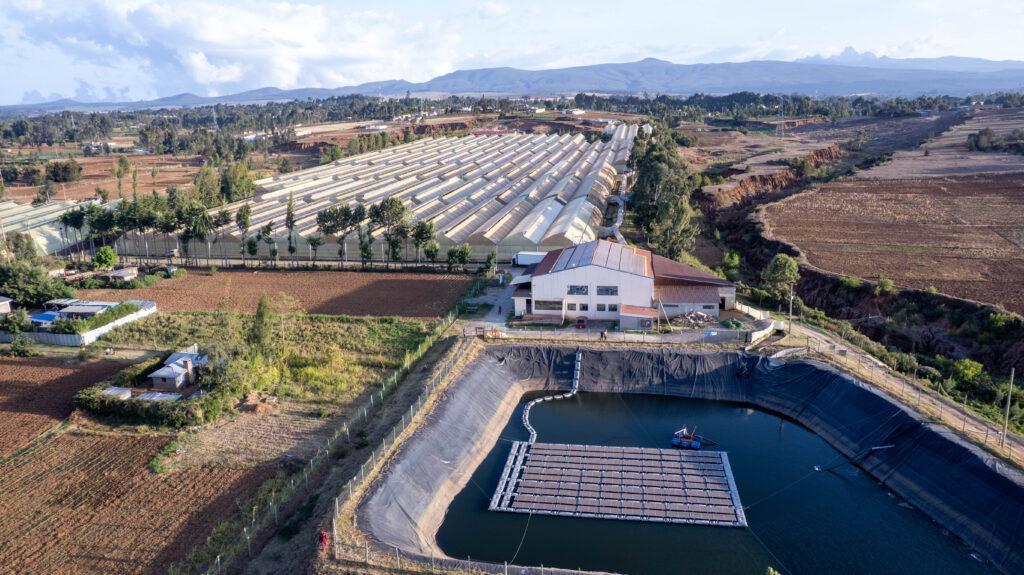
One of the country’s distinctive growing regions is the high-altitude landscape around Mount Kenya, where favourable growing conditions support the cultivation of premium roses.
For commercial buyers, Kenya offers an opportunity to source a diverse selection of fresh-cut roses, including classic hybrid tea varieties, spray roses, scented roses and garden roses.
The appeal lies not simply in the beauty of the flowers, but in the range of possibilities available to businesses serving different customer preferences.
A florist may be looking for elegant white roses for wedding arrangements. A wholesale distributor may require consistent red varieties in commercial quantities, while a premium floral retailer may seek distinctive colours and scented varieties to differentiate its collection.
This is where selecting the right grower becomes particularly important.
When importing roses from Kenya, the objective should be to find a supplier who understands your market, can discuss the specifications you require and has the growing and post-harvest processes to support your business.
7 Essential Steps for Importing Roses from Kenya
1. Find a Reliable Kenyan Rose Farm
Before considering varieties, quantities or shipping arrangements, start with the source.
The relationship between an importer and a flower grower is one of the most important parts of the sourcing process. A dependable supplier should be able to provide clear information about its farm, growing operations, available varieties, quality standards and export capabilities.
Whenever possible, look beyond attractive product photographs.
Explore the supplier’s website, learn about its growing location, examine its product specifications and ask about its approach to harvesting, grading, packing and post-harvest handling.
You should also establish whether you are dealing directly with a flower farm or through an intermediary. Direct communication with a grower can make it easier to discuss availability, product specifications and operational expectations.
Useful questions to ask include:
- Where is the farm located?
- Which rose varieties are currently available?
- What stem lengths and bud sizes can be supplied?
- What quality assurance and certification information can be provided?
- What export destinations and shipping arrangements can the supplier support?
A supplier relationship should begin with transparency. The more clearly both parties understand their expectations, the stronger the foundation for a successful business relationship.
2. Explore Available Rose Varieties
Not every rose serves the same purpose, and not every flower market has the same preferences.
Some buyers prioritise traditional red and white roses, while others are constantly searching for unusual shades, distinctive petal formations and varieties that help their floral collections stand out.
Kenyan rose farms cultivate a broad selection of varieties to serve these different commercial needs.
When exploring a supplier’s catalogue, consider the following:
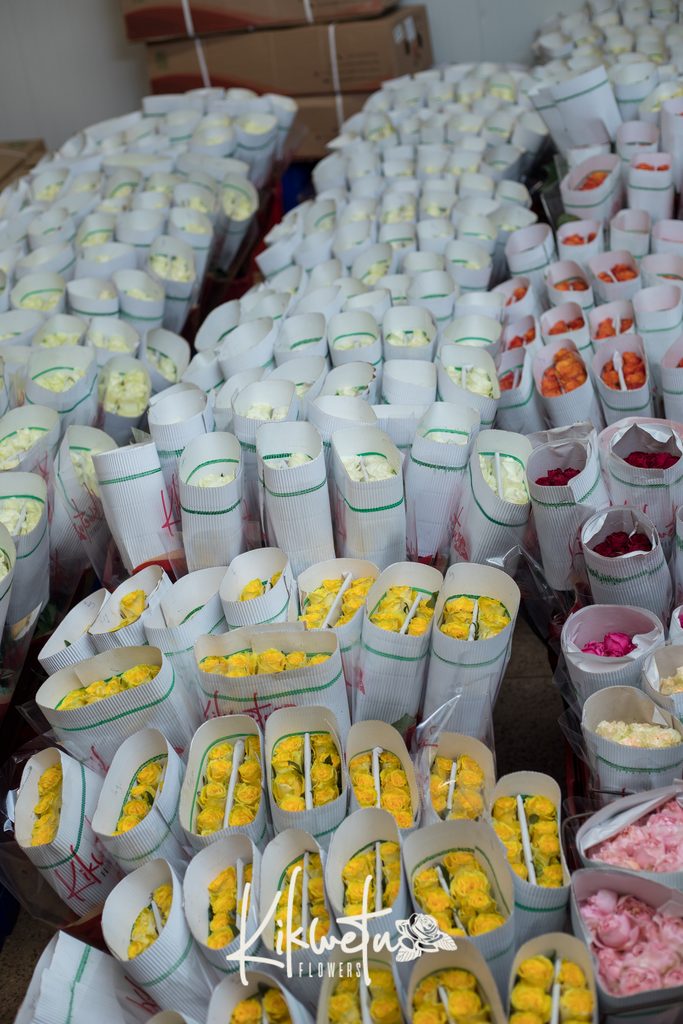
Colour: Look for a balanced selection of reds, pinks, whites, yellows, peaches, oranges and other distinctive shades.
Variety: Explore the differences between standard hybrid tea roses, spray roses, scented roses and garden roses.
Stem length: Depending on the variety and market requirements, buyers may request specific lengths such as 40 cm, 50 cm, 60 cm, 70 cm or 80 cm.
Bud size: The size and presentation of the flower head can influence its suitability for particular floral designs and retail requirements.
Vase life: Ask for the supplier’s published vase-life specifications and the conditions under which they are assessed.
For example, Kikwetu Flowers’ collection includes varieties such as Mandala, Ever Red, Pink Floyd, Superstition, Athena, Confidential and Yelloween, alongside scented varieties such as Pink Ohara and White Ohara.
Each variety brings a different colour profile and commercial possibility to a buyer’s collection.
Explore the Kikwetu premium Kenyan rose collection to discover the available varieties and their specifications.
The right selection is ultimately the one that aligns with your customers, your market positioning and your purchasing requirements.
3. Understand Rose Grades and Product Specifications
Once you have identified the varieties you are interested in, the next step is to understand precisely what you are purchasing.
In the wholesale flower business, product descriptions should be specific. Terms such as premium quality or export quality need to be supported by clear, agreed specifications.
Before placing an order, discuss the following details with your supplier:
- Stem length: Confirm the exact lengths required and how they will be supplied.
- Bud size: Agree on the expected flower-head dimensions for each variety.
- Flower maturity: Discuss the appropriate harvest and opening stage for your intended market.
- Stem quality: Clarify expectations regarding straightness, foliage, strength and overall presentation.
- Grading: Understand the supplier’s grading standards and how flowers are sorted before packing.
- Vase life: Request the published performance specifications and relevant post-harvest care information.
Consistency is particularly important for buyers purchasing repeatedly.
Imagine a distributor supplying several retail outlets. The visual presentation of the roses needs to remain aligned with the agreed specifications across orders. Significant differences in stem length, flower maturity or grading can affect how the flowers are displayed and sold.
This is why experienced importers establish product specifications before confirming an order rather than relying on photographs alone.
4. Confirm Wholesale Quantities, Pricing and Availability
With your preferred varieties and specifications established, attention turns to the commercial side of the purchase.
Flower availability is influenced by variety, production schedules, market demand and seasonal considerations. Consequently, buyers should always confirm current availability directly with the grower.
When requesting a wholesale quotation, provide as much information as possible.
A useful enquiry should include:
- Preferred rose varieties and colours.
- Required stem lengths and bud sizes.
- Estimated quantities per variety.
- Desired delivery destination.
- Preferred shipment date or frequency.
- Any specific packing or quality requirements.
It is equally important to understand what the quoted price includes.
Clarify whether the quotation covers the flowers and packing only or includes additional services such as freight arrangements, documentation or other export-related charges.
Discuss the agreed trading terms, payment arrangements, currency, order confirmation process and responsibilities at each stage of transportation.
For businesses planning regular purchases, it is worth discussing how recurring orders and availability updates will be managed.
A well-defined commercial agreement helps prevent misunderstandings and allows both the grower and buyer to plan more effectively.
5. Understand Export Documentation and Import Requirements
Beautiful roses need the correct documentation to cross international borders.
This is an important part of importing roses from Kenya, particularly because fresh-cut flowers are regulated agricultural products in many destinations.
The exact requirements depend on the importing country, the product and the applicable plant-health regulations.
One of the most important documents is the phytosanitary certificate.
Issued by Kenya’s Plant Health Inspectorate Service (KEPHIS), this certificate confirms that the export consignment meets the relevant phytosanitary requirements of the importing country.
Other documents that may be required include:
- Commercial invoice.
- Packing list.
- Air waybill.
- Import permit, where applicable.
- Certificate of conformity or certificate of origin, where required.
Requirements should always be verified before an order is dispatched.
For example, buyers importing fresh roses into the European Union should pay particular attention to the EU’s plant-health regulations. Fresh roses are subject to phytosanitary certificate requirements, and consignments must meet the relevant inspection and entry conditions.
The European Commission’s guidance on importing plants and plant products provides useful information for businesses sourcing flowers from non-EU countries.
Similarly, the KEPHIS phytosanitary services page explains Kenya’s plant-health certification procedures for exports.
Importers should also consult the relevant plant-health authority and customs officials in their destination country before placing an order. Your customs broker or freight partner can help clarify the documentation and clearance process.
The important thing is to establish these requirements early. Documentation should never become an afterthought once the flowers are ready to leave the farm.
6. Understand International Shipping and Cold-Chain Handling
Fresh-cut roses are living products. Their quality does not stop being important when they leave the farm, and maintaining the right handling conditions throughout transportation is essential.
This is why cold-chain management deserves careful attention when selecting a Kenyan rose supplier.
The process begins long before a shipment reaches the airport. It involves appropriate post-harvest handling, careful grading, suitable packing, temperature management and coordinated transportation.
A well-managed export journey should account for:
Post-harvest handling: Freshly harvested roses should be handled appropriately to minimise physical damage and preserve their quality.
Grading and packing: Flowers are sorted according to their agreed specifications and prepared for transportation using suitable packaging.
Temperature management: Appropriate temperature conditions help protect the flowers during storage and transportation.
Refrigerated transport: Movement from the farm to the airport should be coordinated to minimise unnecessary exposure to unsuitable conditions.
Air freight coordination: Shipment bookings, documentation and dispatch arrangements should be aligned to avoid unnecessary delays.
At Kikwetu Flowers, located in the highlands of Timau, the farm’s published operational information describes 24-hour cold-room facilities and refrigerated transportation to Jomo Kenyatta International Airport in Nairobi.
These are important parts of the journey from farm to export point.
However, the cold chain does not end at the airport. Buyers should also understand how the flowers will be handled after arrival, including airport clearance, collection, refrigerated storage where needed and onward distribution.
A good supplier should be willing to discuss these arrangements with you so that expectations are clear before dispatch.
7. Prepare for Customs Clearance and Final Delivery
The final stage of importing roses from Kenya is getting the shipment through the destination country’s clearance process and into your hands.
Although much of the preparation happens before departure, buyers should be ready to coordinate with their customs broker, freight forwarder or appointed clearing agent when the flowers arrive.
Before dispatch, confirm:
- Who will receive and clear the shipment?
- Which documents must be presented at arrival?
- What duties, taxes or other charges may apply?
- How quickly can the flowers be collected after clearance?
- What storage and transportation arrangements are available at the destination?
Once the shipment arrives, inspect it promptly against the agreed order specifications.
Check the variety labels, quantities, stem lengths, flower condition and overall presentation. Should you identify a discrepancy or quality concern, document it immediately with photographs and communicate with the supplier within the agreed claims period.
It is also worth reviewing the performance of every shipment. Record what worked well, any challenges encountered and areas that could be improved in future orders.
Over time, this creates a more predictable purchasing process and helps strengthen the relationship between the importer and grower.
What Should International Buyers Look for in a Kenyan Rose Exporter?
Importing flowers is not simply a transaction. For businesses operating in competitive markets, the supplier relationship can influence product quality, customer satisfaction and long-term profitability.
Beyond price and variety selection, consider the operational strengths of the farm you choose.
Look for a grower with:
A clear product portfolio: A well-presented catalogue with accurate variety descriptions, colours, stem lengths and bud specifications.
Established growing operations: A farm that understands the growing requirements of its different rose varieties.
Post-harvest infrastructure: Appropriate facilities and handling procedures for grading, packing, storage and temperature management.
Export knowledge: Familiarity with documentation, shipment preparation and the requirements associated with international flower trade.
Clear communication: A team that responds to enquiries, provides accurate availability information and keeps buyers informed.
A commitment to quality: Consistent processes that support the agreed product specifications.
Certification information is another important consideration. Buyers should request current certificates and supporting documentation rather than relying solely on general claims about compliance.
Ultimately, the best supplier is not necessarily the one offering the lowest quotation. It is the one whose quality, operational capabilities, communication and commercial terms align with your business requirements.
Why Source Wholesale Roses Directly from Kikwetu Flowers?
In the quiet highlands of Ngusishi, near Timau in Meru County, the journey of a Kikwetu rose begins long before it reaches an international market.
Established in 2019, Kikwetu Flowers is a Kenyan rose farm specialising in the cultivation and export of premium roses.

Located in a high-altitude growing region near Mount Kenya, the farm brings together a diverse collection of rose varieties, attentive growing practices and post-harvest handling processes designed to support the quality of its flowers.
From classic hybrid tea roses to distinctive scented and spray varieties, Kikwetu’s collection offers international buyers different possibilities for their wholesale and distribution needs.
The farm also places importance on the processes that take place beyond cultivation. Its published operations include cold-room facilities and refrigerated transportation to Nairobi’s international airport, helping maintain controlled handling conditions during the journey to export.
But at the heart of Kikwetu is a belief that flowers are more than a product. They represent the people, care and work behind every harvest.
The name Kikwetu, a Swahili expression meaning our culture and our style, reflects the farm’s connection to its surrounding community and its commitment to growing with purpose.
For flower importers, wholesalers, distributors and professional florists looking to establish connections with a Kenyan rose grower, Kikwetu offers an opportunity to explore premium varieties and discuss wholesale sourcing requirements directly with the farm.
Discover more about Kikwetu Flowers and its growing story or explore the full rose collection.
Bringing Your Next Rose Order to Life
Every successful flower business begins with a choice: choosing the right flowers, the right market and, perhaps most importantly, the right growing partner.
Importing roses from Kenya opens the door to an extensive selection of fresh-cut varieties and opportunities to build meaningful relationships with growers who understand the international flower trade.
The process requires preparation, clear specifications and careful coordination, but when each stage is thoughtfully managed, sourcing roses internationally can become a valuable part of your business.
Whether you are exploring new varieties, expanding your wholesale portfolio or looking for a Kenyan rose-growing partner, the conversation can begin with a simple enquiry.
At Kikwetu Flowers, we would love to hear about your next floral collection.
Explore our roses, discuss your wholesale requirements and connect with our team to enquire about current varieties, availability and export arrangements.
From the highlands of Timau to flower businesses around the world, let your next collection begin with Kikwetu.