

The florist in Amsterdam remembers the box.
It had travelled further in forty-eight hours than most people travel in a lifetime — from a high-altitude farm on the slopes of Mount Kenya, across a continent, into the hold of a cargo plane, and finally onto her workbench on a grey December morning. She opened it expecting casualties. Instead, she found stems so firm, buds so tight and cool to the touch, that she checked the label twice. Kikwetu Flowers-Timau,Kenya.
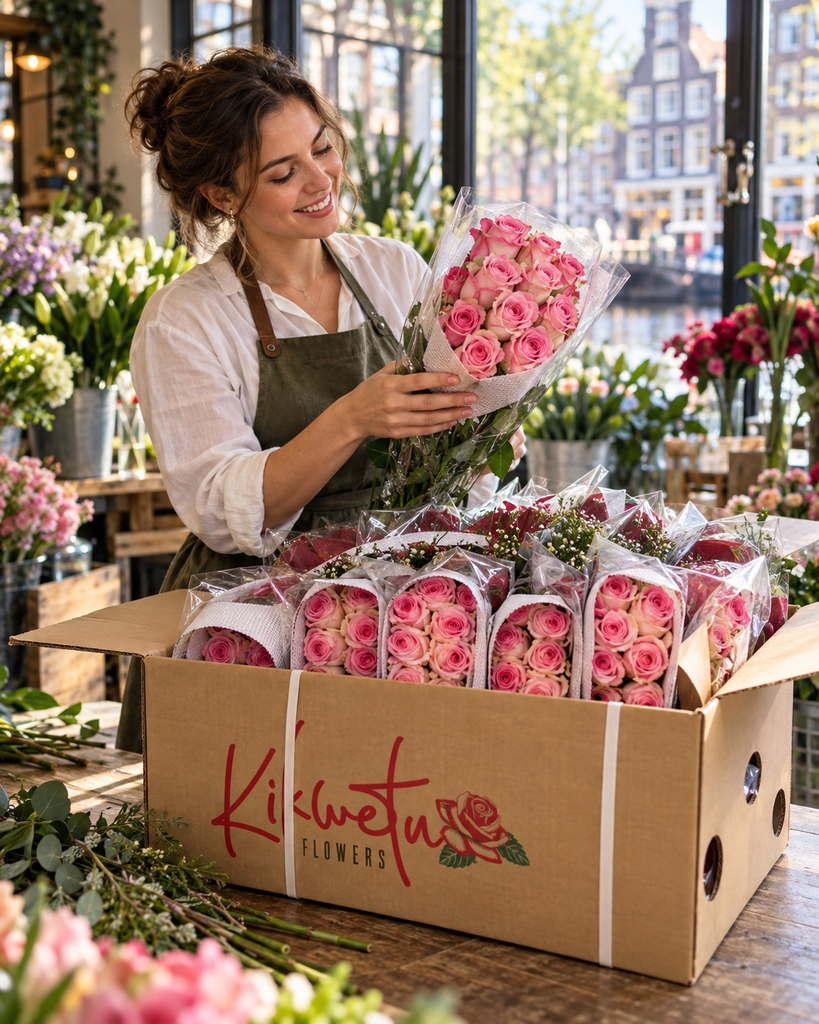
Two weeks later, the last of them was still opening in a client’s vase — while locally grown stems bought the same week had long since faded.
How is that possible? How can a rose cut on an African mountainside outlast flowers grown an hour from her shop? The answer is not luck, and it is not one thing. It is a chain of five disciplines, executed without compromise, at every hour of the journey. These are the five secrets behind the freshness of Kenyan roses — and once you see them, you will never look at a flower box the same way again
Secret 1: The Harvest Happens Before the Sun Does
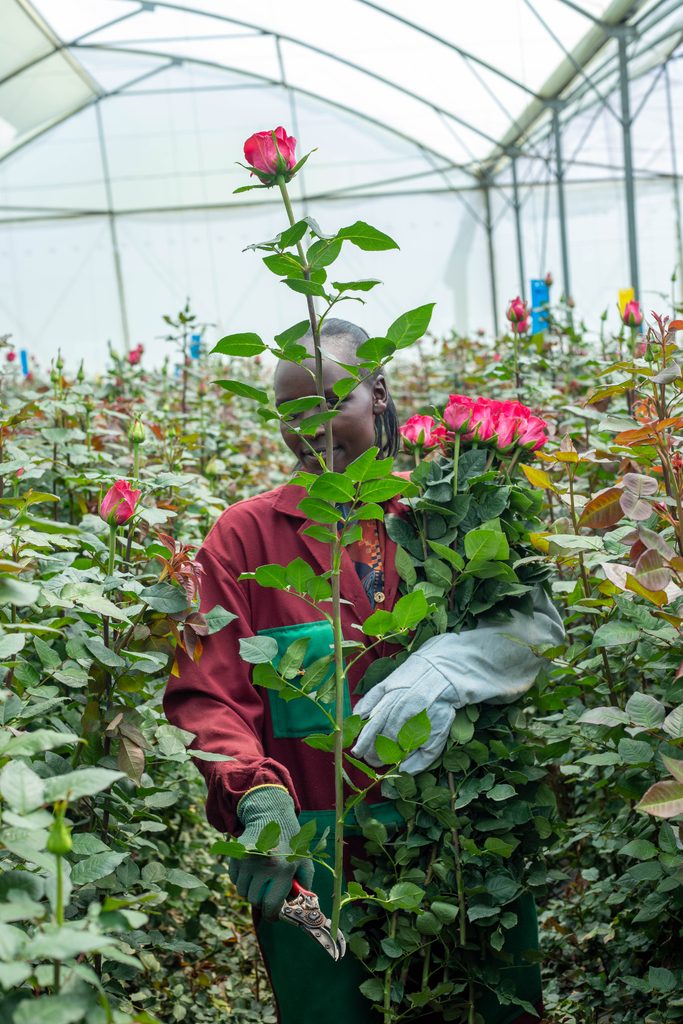
Temperature is destiny for a cut rose. The moment a stem is cut, the clock starts — and heat is the enemy. That is why every Kikwetu rose is harvested in the first light of dawn, while the mountain air is still cool and the petals hold their firmness. A rose picked at midday loses days of vase life before it ever reaches water. A rose picked at dawn keeps its strength for the entire journey ahead. It is a simple secret, but most of the world gets it wrong.
Secret 2: The First Hour Decides Everything
Speed means nothing without water, and water means nothing without cold. Within minutes of harvest, each stem is placed into chilled hydration tanks — clean, cool, and precisely monitored. This first hydration stops the stress response of the cut, recharges the stem, and locks in the turgidity that makes petals feel crisp instead of soft. Florists can feel the difference the moment they lift a stem from the box. That feel is this secret, made physical.
Secret 3: Only Perfection Is Allowed to Travel
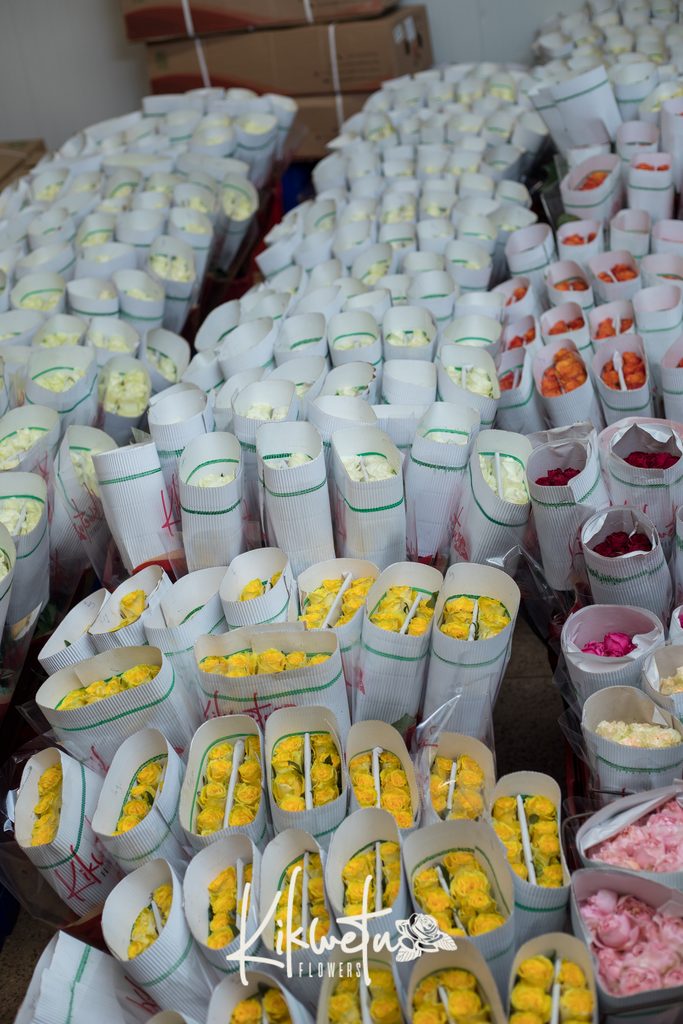
Here is a truth the flower industry rarely says aloud: exporting is unforgiving. A stem that travels thousands of miles must survive handling, temperature shifts and time — so anything less than perfect becomes a liability halfway across the world. On our grading lines at kikwetu flowers in Timau, every stem is measured for length and inspected for symmetry, colour and head size.

Only the finest make the box. This is why Kenyan roses arrive with such remarkable uniformity: weakness was never allowed on the plane.
Secret 4: The Cold Chain Never Breaks — Not Even Once
From the grading hall, the roses move into pre-cooling, then careful packing, then refrigerated trucks for the journey to Nairobi’s Jomo Kenyatta International Airport. There, they board refrigerated cargo planes bound for Amsterdam, Dubai, London and beyond. At no point — not for a single minute — is the cold chain interrupted. One break, one warm hour on a tarmac, and days of vase life evaporate. The cold chain is not a step in the process. It is the process.
Secret 5: Altitude Slows the Bloom — and Extends the Beauty
The final secret was planted long before any harvest. Timau’s high altitude means cool nights and slow, deliberate growth. Roses grown slowly develop denser petals, stronger stems and a natural reluctance to open too fast. Combined with a vase life of ten to fourteen days, this means Kenyan roses arrive tight and open on schedule — in your client’s vase, during the week they were bought for, not wilting in a box somewhere over the Mediterranean.
The Five Secrets, One Promise
Dawn harvest. Chilled hydration. Ruthless grading. An unbroken cold chain. And the patience of altitude. Each secret alone would mean little — but chained together, hour by hour, mile by mile, they deliver something remarkable: a rose that crosses continents and arrives as fresh as the morning it was cut. That is the promise inside every Kikwetu box.
Why This Journey Matters Now
December is when freshness earns its keep. Hotel lobbies, Christmas tablescapes, wedding aisles and New Year events all demand roses that perform on a specific date, at their absolute peak. A rose that faded on the journey cannot be replaced on the twenty-third of December. A rose that arrived fresh becomes the bouquet people photograph.

The florist in Amsterdam no longer checks the label twice. She already knows what the kikwetu flowers box will hold.
Experience the Journey Yourself
The best way to understand these five secrets is to hold the result in your hands. Explore our [premium rose varieties] from Timau, or [contact our export team] to arrange your shipment — and discover why florists across the world trust Kenyan roses for their most important weeks of the year.
Frequently Asked Questions
How are Kenyan roses transported to Europe and the Gulf?
Kenyan roses travel in an unbroken cold chain: pre-cooling and packing at the farm, refrigerated trucking to Nairobi’s Jomo Kenyatta International Airport, and refrigerated cargo flights to destinations including Amsterdam, Dubai and London, typically within 48 hours of harvest.
How long do Kenyan roses last in a vase?
Our premium T-hybrid varieties deliver a vase life of 10 to 14 days when conditioned properly — among the longest in the global rose trade.
Why are Kenyan roses considered among the best in the world?
Kenya’s equatorial sunlight and high-altitude climate create ideal growing conditions, while farm disciplines like dawn harvesting, chilled hydration and strict grading ensure the roses arrive as fresh as the moment they were cut.