

The Real Cost of Cheap Roses: What Importers Lose When They Cut Corners on Sourcing
Premium rose sourcing isn’t about paying more for the same product. It’s about paying for certainty while your competitors gamble with their reputation.
Every importer has seen the spreadsheet. The one where Farm X offers roses at 15% below market rate, and someone in procurement marks it with a green highlight. But here’s what that spreadsheet never shows: the wilting petals on day three, the rejected auction lot, the florist who stops returning your calls because their customer blamed them.
At Kikwetu Flowers, we don’t sell roses. We sell the absence of those phone calls.
Why Premium Rose Sourcing Protects Your Margins
The Math Importers Ignore: Price Per Stem vs. Total Cost
Most buyers optimize for the wrong number. They see price per stem. What they should see is total cost of ownership (TCO).
| Cost Category | Cheap Import | Premium Rose Sourcing |
|---|---|---|
| Upfront price per stem | $0.12 | $0.15 |
| Rejection rate at inspection | 8–12% | Under 2% |
| Average vase life | 5–7 days | 10–14 days |
| Replacement/refund rate | 15–20% | Under 3% |
| Customer retention impact | Negative | Positive |
| True cost per usable stem | $0.16–$0.18 | $0.15–$0.16 |
The cheap rose isn’t cheaper. It’s just worse at hiding its true cost.
How Cheap Roses Destroy Customer Trust
In the flower business, your customer isn’t the end consumer. Your customer is the florist, the event planner, the retail chain. And their trust is built on predictability.
When a shipment arrives with 10% below-grade stems, you don’t just lose money on replacements. You lose the 6 AM phone call that doesn’t happen — the one where they quietly switch to a reliable flower exporter who doesn’t make them explain wilting centerpieces to a bride.
That trust, once broken, costs 5x more to rebuild than any premium you paid upfront.
The Hidden Costs Cheap Rose Imports Hide
Rejection Rates at Auction: The Silent Margin Killer
European auction houses and Middle Eastern inspectors don’t grade on effort. They grade on rose import quality; head size, stem straightness, petal density, and freedom from blemish.
A single rejected lot doesn’t just mean lost revenue. It means:
- Storage fees while you dispute or replace
- Air freight premiums for emergency re-shipment
- Contract penalties from downstream buyers
- Audit flags that trigger more frequent inspections
With premium rose sourcing, rejection rates drop below 2% because quality control happens at the farm, not at the port.
Failed Cold Chain Logistics: When Temperature Breaks the Bank
Every degree above 4°C between harvest and delivery accelerates aging. Cheap suppliers cut corners on cold chain logistics — shared trucks, delayed precooling, handoffs through multiple brokers.
The result? Ethylene buildup. Petal drop. Stems that look fine on arrival but collapse within 48 hours.
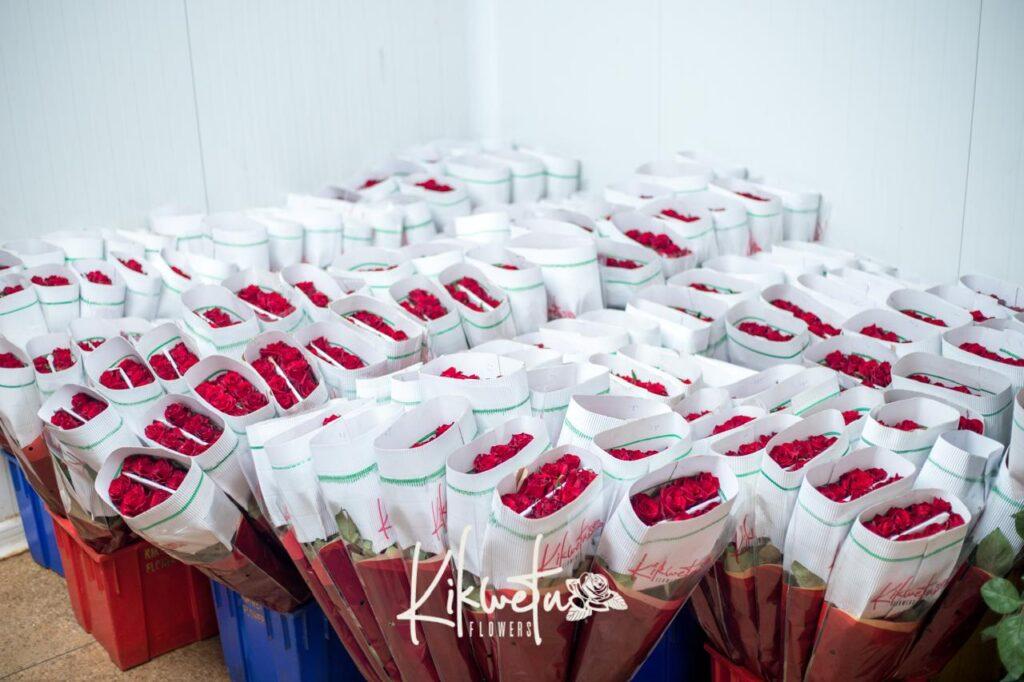
Our 100% cold chain process maintains temperature integrity from our 2,400-meter farm to your cold storage. No handoffs. No gaps. No surprises.
Compliance Failures: ESG Audits That End Contracts
European retailers and Middle Eastern distributors now require ESG documentation: labor standards, water usage, chemical records. Cheap suppliers often operate in gray zones — and when their paperwork fails, your contract gets suspended while you scramble for a new source.
Premium sourcing means pre-certified compliance. Not documents you hope will pass. Documents that already have.
What Reliable Flower Exporters Actually Deliver
Direct Farm Traceability: Know Your Source
When you source through brokers, you don’t know the farm. You don’t know the altitude, the irrigation source, the harvest date, or the worker conditions. You’re buying a black box with thorns.
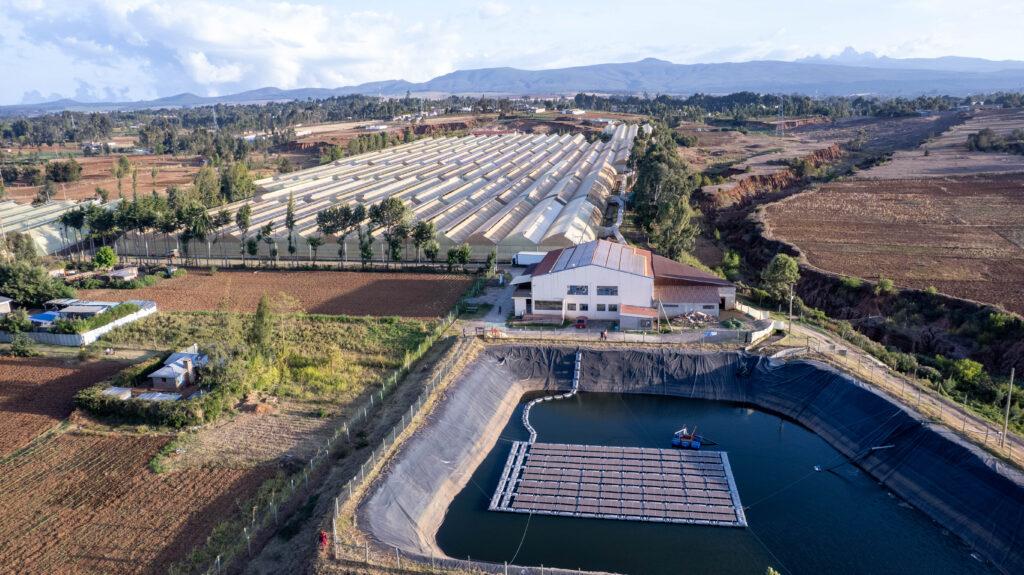
At Kikwetu, every stem is traceable to a specific block in Timau, Kenya, farmed at 2,400 meters on the slopes of Mt. Kenya. Our sustainable farming practices use rainwater and borehole irrigation — no chemical runoff, no water waste, no questions you can’t answer when your buyer asks.
Consistent Rose Import Quality: Same Farm, Same Standard
Consistency is the most underrated quality metric. A florist building a wedding order doesn’t need most stems to be perfect. They need all of them to be identical.
Because we grow and export directly — no middlemen, no consolidation from multiple farms — our T-Hybrid and Spray rose varieties arrive with uniform head size, stem length, and color saturation. Batch to batch. Season to season.

Pre-Certified Compliance: No Surprises at Port
We don’t scramble for paperwork when a shipment lands. Our phytosanitary certificates, labor audits, and environmental reports are maintained continuously. When your customs agent asks, we answer before you even forward the email.

Cold Chain Logistics: The Premium Difference
How Kikwetu’s 100% Cold Chain Works
Within two hours of harvest, our roses are:
- Hydrocooled to remove field heat
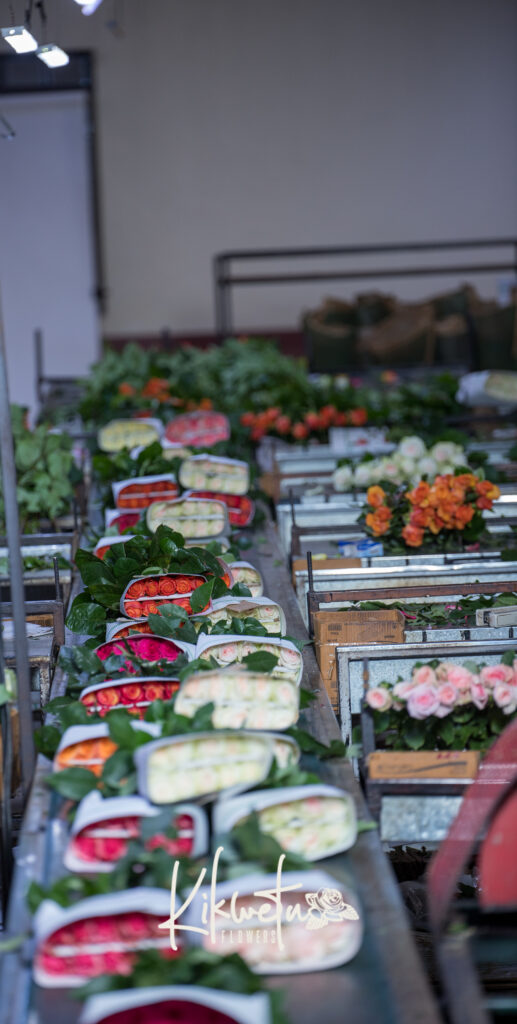
- Graded and bunched in chilled packing sheds
- Loaded into refrigerated trucks at 2°C
- Transferred directly to cold storage at Nairobi’s Jomo Kenyatta International Airport
- Flown on temperature-controlled cargo to Amsterdam, Dubai, or your designated hub
No open-air waiting. No ambient-temperature handoffs. No “close enough” temperature logging.
From 2,400m to Your Door: A Temperature-Controlled Journey
Altitude matters. At 2,400 meters, our roses grow slower, developing denser petals and stronger stems. That natural durability combines with our cold chain logistics to deliver vase life that cheap competitors simply cannot match.
Our customers don’t measure quality on arrival. They measure it on day ten — when Kikwetu roses are still selling, and the cheap alternative has been discarded.
How to Verify Rose Import Quality Before You Buy
The Sample Shipment Test
Before committing to any new supplier, request a trial shipment. Then test:
- Vase life: Place stems in identical conditions. Track daily performance for 14 days.
- Consistency: Measure head diameter and stem length across 50 stems. Calculate variance.
- Recovery: Dehydrate stems for 24 hours, then rehydrate. Premium roses recover; cheap ones don’t.
We encourage this test. Because we know the result.
What to Ask Your Kenyan Rose Farm Partner
- What is your farm’s altitude and how does it affect growth?
- Can you provide cold chain temperature logs for my specific shipment?
- What is your historical rejection rate at [target market] inspection?
- Do you own the farm, or are you a broker consolidating from multiple sources?
- What community or environmental programs do you operate?
The answers separate premium rose sourcing from expensive gambling.
Conclusion: Premium Rose Sourcing Is Risk Management
The flower industry runs on thin margins and high expectations. Every importer is one bad shipment away from a lost account, a damaged reputation, or a compliance nightmare they didn’t see coming.
Cheap roses don’t save money. They transfer risk — from the supplier’s balance sheet to yours.
Premium rose sourcing is the opposite. It’s the decision to pay for certainty: consistent quality, verified compliance, transparent cold chain logistics, and a farm partner who answers the phone when something matters.
At Kikwetu, we grow roses at 2,400 meters, export them through a 100% cold chain, and stand behind every stem we ship. Not because it’s easy. Because the alternative — explaining to a customer why their flowers died — is something we refuse to let you experience.
Request a sample shipment and see the difference measured in days of vase life, not cents per stem.
Frequently Asked Questions
What is premium rose sourcing?
Premium rose sourcing means partnering with farms that guarantee consistent quality, full traceability, and cold chain integrity — ensuring every stem meets importer standards from harvest to delivery.
Why do cheap roses cost importers more long-term?
Cheap roses often fail quality inspections, have shorter vase life, and carry compliance risks. The cost of replacements, rejected shipments, and lost customer trust far exceeds any upfront savings.
How does cold chain logistics affect rose quality?
Cold chain logistics maintains a temperature-controlled environment from farm to importer. Any break in the chain accelerates aging, reduces vase life, and increases waste.
What should I look for in a reliable flower exporter?
Look for direct farm relationships, transparent cold chain documentation, ethical labor certifications, and a proven track record with your target import market.
How long do Kikwetu roses last compared to cheap alternatives?
Kikwetu roses typically last 10–14 days with proper care, compared to 5–7 days for budget alternatives. This difference comes from our 2,400-meter altitude growing conditions and uncompromising cold chain.
Ready to stop gambling with your supply chain? Contact Kikwetu Flowers for a sample shipment and discover what premium rose sourcing really means.